WhatsApp Channel
Telegram Group
🧬 Postdoctoral Researcher – Tumor Mechanobiology & Colorectal Cancer | Institut Gustave Roussy
Institution: Institut Gustave Roussy
Research Group: Tumor Dynamics and Plasticity Group
Principal Investigator: Carlos Pérez-González
📍 Location: Villejuif, Paris, France
💼 Position Available: Postdoctoral Researcher
🔬 Research Area: Tumor Mechanobiology | Colorectal Cancer | Quantitative Imaging | Spatial Transcriptomics | Tissue Mechanics | Cancer Biology | Tumor Plasticity
The Tumor Dynamics and Plasticity Group at Institut Gustave Roussy, led by Carlos Pérez-González and supported by an ERC Starting Grant, is seeking a motivated Postdoctoral Researcher to investigate the mechanical evolution of colorectal cancer.
The project aims to understand how mechanical and biochemical signals influence cancer cell plasticity, combining tumor mechanobiology, quantitative imaging, spatial transcriptomics, and tissue mechanics.
🔬 What You’ll Work On
🧬 Tumor Mechanobiology
Investigate how mechanical signals within tumors influence cancer cell states, plasticity, and colorectal cancer progression.
🔬 Quantitative Imaging
Develop and apply quantitative imaging approaches to study cellular and tissue-level changes, including:
- Cell segmentation
- Cell tracking
- Cell morphometry
- Quantitative image analysis
- Traction force microscopy
🧪 Spatial Transcriptomics & Single-Cell Sequencing
Integrate molecular profiling approaches to investigate the spatial and cellular organization of tumors, including:
- Spatial transcriptomics
- Single-cell sequencing
- Transcriptomic analysis
- Cellular state characterization
⚙️ Tissue Mechanics & Cancer Cell Plasticity
Bridge tissue mechanics and transcriptomics to understand how mechanical signals guide cancer cell plasticity in organoids and tumors.
🧫 Research Approaches
The successful candidate will work at the interface of biology, physics, and quantitative research, using approaches such as:
- Quantitative imaging
- Image analysis
- Cell segmentation
- Cell tracking
- Cell morphometry
- Traction force microscopy
- Spatial transcriptomics
- Single-cell sequencing
- Tissue mechanics
- Transcriptomics
- Organoid models
The project offers an opportunity to combine dry-lab computational approaches with experimental cancer biology.
🧪 Experimental & Translational Opportunities
The research group is part of a newly established multidisciplinary team working at the biology–physics interface.
The successful researcher will have access to:
- Patient-derived organoids
- Clinical cancer samples
- Imaging approaches
- Experimental tumor models
- Quantitative and computational tools
Wet-lab experience in imaging, organoid culture, and immunostaining is not required but will be considered an asset.
🎯 Ideal Candidates
Applicants should have:
- Expertise in computational and/or quantitative biology.
- Strong interest in interdisciplinary cancer research.
- Interest in working across both wet-lab and dry-lab approaches.
- Ability to work in a multidisciplinary research environment.
- Interest in tumor mechanics, quantitative imaging, or cancer cell plasticity.
Experience in the following areas would be advantageous:
- Image analysis
- Computational biology
- Quantitative biology
- Imaging
- Organoid culture
- Immunostaining
- Spatial transcriptomics
- Single-cell sequencing
- Tissue mechanics
🌟 What You’ll Gain
- Research experience in tumor mechanobiology.
- Opportunity to study the mechanical evolution of colorectal cancer.
- Advanced experience in quantitative imaging.
- Exposure to cell segmentation, tracking, and morphometry.
- Experience with spatial transcriptomics and single-cell sequencing.
- Opportunity to integrate tissue mechanics with transcriptomic data.
- Experience working with patient-derived organoids and clinical samples.
- Interdisciplinary research experience at the biology–physics interface.
- Opportunity to work within a newly established multidisciplinary research team.
🏥 Research Environment
The Tumor Dynamics and Plasticity Group investigates how physical and molecular signals shape tumor cell states and cancer progression.
The group combines tumor mechanobiology, quantitative imaging, tissue mechanics, and transcriptomics to understand cancer cell plasticity.
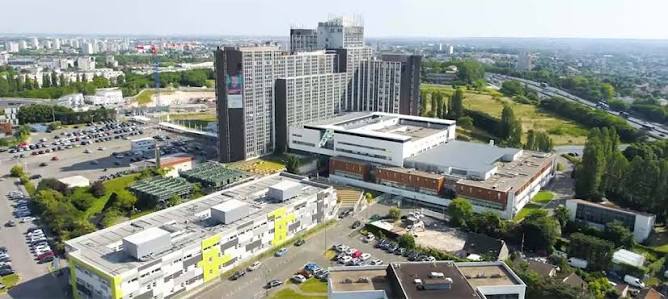
Located at Institut Gustave Roussy, one of Europe’s largest cancer hospitals, the research environment provides access to clinically relevant samples and patient-derived models.
💼 Position Details
Position: Postdoctoral Researcher
Institution: Institut Gustave Roussy
Research Group: Tumor Dynamics and Plasticity Group
Principal Investigator: Carlos Pérez-González
Funding: ERC Starting Grant
Location: Villejuif, Paris, France
Duration: 2 Years, Extendable
Research Focus: Tumor Mechanobiology | Colorectal Cancer | Cancer Cell Plasticity
Key Areas: Quantitative Biology | Quantitative Imaging | Tissue Mechanics | Transcriptomics
Advanced Approaches: Spatial Transcriptomics | Single-Cell Sequencing | Traction Force Microscopy
Experimental Models: Patient-Derived Organoids | Tumors | Clinical Samples
Wet-Lab Experience: Not Required, but an Asset
🧬 Research Focus
The project focuses on understanding how mechanical signals guide cancer cell plasticity during colorectal cancer progression.
Major research areas include:
- Tumor mechanobiology
- Colorectal cancer
- Tissue mechanics
- Cancer cell plasticity
- Quantitative imaging
- Image analysis
- Cell segmentation
- Cell tracking
- Cell morphometry
- Traction force microscopy
- Spatial transcriptomics
- Single-cell sequencing
- Computational biology
- Patient-derived organoids
📄 How to Apply
Interested candidates should submit:
- Motivation Letter
- Curriculum Vitae (CV)
- Contact details of references
📧 Application Email: carlos.perezgonzalez@gustaveroussy.fr
📅 Application Deadline: 15 November 2026
Contract Duration: 2 years, extendable
📌 Job Details
Institution: Institut Gustave Roussy
Research Group: Tumor Dynamics and Plasticity Group
Principal Investigator: Carlos Pérez-González
Position: Postdoctoral Researcher
Location: Villejuif, Paris, France
Funding: ERC Starting Grant
Contract Duration: 2 Years, Extendable
Research Area: Tumor Mechanobiology | Colorectal Cancer | Tumor Plasticity
Research Areas: Quantitative Biology | Cancer Biology | Tissue Mechanics | Transcriptomics
Key Technologies: Quantitative Imaging | Image Analysis | Cell Segmentation | Cell Tracking | Morphometry | Traction Force Microscopy
Molecular Approaches: Spatial Transcriptomics | Single-Cell Sequencing
Experimental Resources: Patient-Derived Organoids | Clinical Samples
Candidate Profile: Computational Biology | Quantitative Biology | Related Fields
Wet-Lab Experience: Not Required, but an Asset
Application Mode: Email
Application Materials: Motivation Letter | CV | Reference Contacts
Application Email: carlos.perezgonzalez@gustaveroussy.fr
Application Deadline: 15 November 2026
Category
Postdoctoral Position | Postdoc France | Cancer Research | Colorectal Cancer | Tumor Mechanobiology | Quantitative Biology | Tumor Plasticity | Paris Research Jobs
🏷️ Tags
#Postdoc #PostdoctoralPosition #PostdocFrance #GustaveRoussy #CancerResearch #ColorectalCancer #TumorMechanobiology #CancerBiology
Follow Biopractify for more & Join our community : https://chat.whatsapp.com/F38FNCU0nfvFCDf1mYJDbm
About The Author