WhatsApp Channel
Telegram Group
🧬 ERC-Funded Postdoctoral Researcher in Molecular Spatial Omics | EPFL, Lausanne
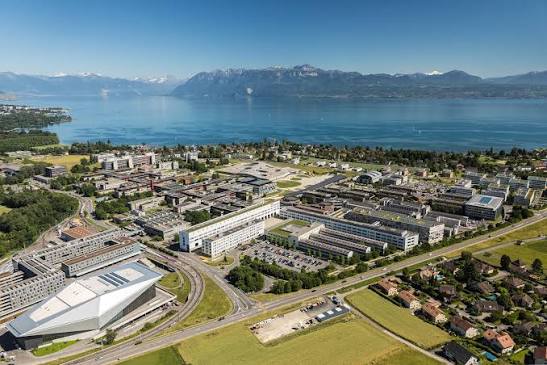
Institution: École Polytechnique Fédérale de Lausanne (EPFL), School of Life Sciences
Laboratory: Molecular Spatial Omics Laboratory (Schueder Lab)
Research Project: Molecular Atlas Project (MAP), ERC Starting Grant
👨🔬 Principal Investigator: Dr. Florian Schueder
📍 Location: Lausanne, Switzerland
💼 Position: Postdoctoral Researcher
📅 Expected Start Date: 1 February 2027, with some flexibility
🔬 Research Areas: Molecular Spatial Omics | Spatial Biology | DNA Nanotechnology | Super-Resolution Microscopy | Molecular Barcoding | Sequencing | Molecular Biology | Bioinformatics | Single-Molecule Imaging
The Molecular Spatial Omics Laboratory (Schueder Lab) at the School of Life Sciences, EPFL, is seeking a highly motivated Postdoctoral Researcher to join the Molecular Atlas Project (MAP), funded through an ERC Starting Grant.
The project focuses on developing innovative approaches that combine molecular barcoding, advanced microscopy, and sequencing to achieve comprehensive spatial mapping of biological systems.
🔬 About the Schueder Lab
The Molecular Spatial Omics Laboratory at EPFL develops technologies to reveal the molecular organization of biological systems with high spatial precision.
The laboratory combines approaches from:
- Molecular biology
- DNA nanotechnology
- Super-resolution microscopy
- Single-molecule imaging
- Molecular barcoding
- Sequencing
- Quantitative image analysis
- Computational analysis
The research aims to develop technologies capable of mapping molecular information within biological systems at increasingly comprehensive scales.
🧪 The Project
The selected postdoctoral researcher will work with Dr. Florian Schueder on the Molecular Atlas Project (MAP).
The project aims to develop new technologies that combine molecular barcoding, advanced microscopy, and sequencing for comprehensive spatial mapping of biological systems.
The research will progress from controlled proof-of-concept experiments toward increasingly large-scale molecular mapping applications.
Key Project Components
The project includes:
- DNA nanotechnology-based proof-of-concept experiments
- Development of the core technologies of MAP
- Combining DNA-PAINT and FLASH-PAINT
- Super-resolution microscopy
- Molecular biology and sequencing
- Progression toward transcriptome- and proteome-scale applications
- Computational analysis and quantitative data interpretation
🧬 Molecular Spatial Omics Research
A central goal of the project is to develop technologies capable of determining where molecular components are located within biological systems while maintaining high molecular specificity and spatial resolution.
The research will investigate approaches combining:
- Molecular barcoding
- DNA-based technologies
- Super-resolution imaging
- Sequencing
- Spatial molecular mapping
- Quantitative image analysis
- Computational approaches
These technologies will contribute toward comprehensive molecular atlases of biological systems.
🔬 DNA Nanotechnology & Molecular Barcoding
The postdoctoral researcher will contribute to the development of DNA-based technologies for spatial molecular analysis.
Research activities may include:
- DNA nanotechnology
- DNA-based molecular barcoding
- Controlled DNA-based proof-of-concept experiments
- DNA-PAINT
- FLASH-PAINT
- Molecular biology
- Sequencing-based approaches
- Development of technologies for spatial molecular mapping
The project provides an opportunity to work at the interface of DNA nanotechnology, microscopy, molecular biology, and spatial omics.
🔭 Super-Resolution Microscopy
Advanced microscopy is a major component of the Molecular Atlas Project.
The research will involve technologies and approaches related to:
- Super-resolution microscopy
- Single-molecule fluorescence
- DNA-PAINT
- FLASH-PAINT
- Quantitative imaging
- Spatial molecular detection
- Image analysis
The candidate will contribute to the development and application of imaging technologies for high-resolution molecular mapping.
🧬 Transcriptome- & Proteome-Scale Applications
An important long-term objective of MAP is to progress from controlled proof-of-concept experiments toward transcriptome- and proteome-scale applications.
The research will therefore combine experimental technology development with:
- Molecular biology
- Sequencing
- Spatial mapping
- Computational analysis
- Quantitative image analysis
- Large-scale molecular profiling
This interdisciplinary approach will help establish new strategies for comprehensive spatial analysis of biological systems.
💻 Computational & Data Analysis
The project also involves computational analysis of imaging and molecular data.
Potential research activities include:
- Quantitative image analysis
- Analysis of super-resolution microscopy data
- Sequencing data analysis
- Spatial molecular data interpretation
- Computational analysis of large-scale datasets
- Integration of imaging and sequencing information
Candidates with computational experience may therefore contribute to the development of quantitative spatial omics approaches.
🎯 Who Are We Looking For?
The ideal candidate will be a motivated and experienced scientist interested in developing new technologies at the interface of molecular biology, microscopy, DNA nanotechnology, and spatial omics.
Candidates should have a PhD or equivalent doctoral degree in a relevant field such as:
- Chemistry
- Molecular Biology
- Biochemistry
- Bioengineering
- Nanoscience
- Physics
- Related disciplines
Experience in one or more of the following areas will be particularly valuable:
- DNA nanotechnology, DNA origami, DNA hybridization, or nucleic-acid engineering
- Protein biochemistry, protein-DNA conjugation, or macromolecule synthesis
- Single-molecule fluorescence and super-resolution microscopy
- DNA-PAINT or related imaging technologies
- Molecular biology and sequencing
- Quantitative image analysis
- Computational or bioinformatics approaches
🧠 What We Value
Applicants do not need to have experience in all areas of the project.
More importantly, candidates should demonstrate:
- A strong background in at least one relevant research field.
- Excellent experimental skills.
- Scientific independence.
- Strong problem-solving abilities.
- Enthusiasm for developing and learning new technologies.
- Interest in interdisciplinary research.
- Ability to work in a collaborative research environment.
The position is particularly suitable for researchers who are excited about learning techniques outside their existing area of expertise.
🌟 What We Offer
The selected postdoctoral researcher will have the opportunity to:
- Work on an ERC-funded research project.
- Join the Molecular Spatial Omics Laboratory at EPFL.
- Work on the Molecular Atlas Project (MAP).
- Develop new molecular spatial omics technologies.
- Gain experience in DNA nanotechnology and molecular barcoding.
- Work with advanced super-resolution microscopy approaches.
- Explore DNA-PAINT and FLASH-PAINT technologies.
- Combine microscopy with molecular biology and sequencing.
- Work toward transcriptome- and proteome-scale applications.
- Develop computational and quantitative analysis skills.
- Work in a highly interdisciplinary scientific environment.
- Contribute to cutting-edge research in spatial biology and molecular mapping.
🌍 Research Environment
The position offers the opportunity to work at EPFL in Lausanne, Switzerland, within a highly interdisciplinary research environment.
The project brings together expertise in:
DNA Nanotechnology → Molecular Biology → Super-Resolution Microscopy → Sequencing → Computational Analysis → Spatial Omics
The position is funded through an ERC Starting Grant and provides an opportunity to contribute to the development of emerging technologies for molecular-scale spatial mapping.
📩 How to Apply
Interested candidates should send their application directly to Dr. Florian Schueder.
Application Materials
Please provide:
- CV
- Brief statement of motivation and research interests
- Ideally, contact details of two references
Informal inquiries are also very welcome.
📧 Application Contact
Dr. Florian Schueder
Email: florian.schueder@epfl.ch
📅 Position Timeline
Position: Postdoctoral Researcher
Project: Molecular Atlas Project (MAP)
Funding: ERC Starting Grant
Expected Start Date: 1 February 2027
Start Date Flexibility: Some flexibility regarding the exact starting date
Application Deadline: No specific deadline stated in the announcement
Application Mode: Email application
Application Email: florian.schueder@epfl.ch
📌 Position Details
Institution: EPFL – École Polytechnique Fédérale de Lausanne
School: School of Life Sciences
Laboratory: Molecular Spatial Omics Laboratory (Schueder Lab)
Principal Investigator: Dr. Florian Schueder
Project: Molecular Atlas Project (MAP)
Funding: ERC Starting Grant
Position: Postdoctoral Researcher
Location: Lausanne, Switzerland
Expected Start: 1 February 2027
Research Areas: Molecular Spatial Omics | Spatial Biology | DNA Nanotechnology | Super-Resolution Microscopy | Molecular Biology | Sequencing | Bioinformatics
Key Technologies: DNA-PAINT | FLASH-PAINT | Molecular Barcoding | Super-Resolution Microscopy | DNA Nanotechnology
Academic Background: PhD or equivalent in Chemistry | Molecular Biology | Biochemistry | Bioengineering | Nanoscience | Physics or related field
Application Deadline: No deadline stated
Application Mode: Email
Application Email: florian.schueder@epfl.ch
Category
Postdoctoral Position | Postdoc Jobs | Molecular Spatial Omics | Spatial Biology | DNA Nanotechnology | Super-Resolution Microscopy | EPFL Jobs | Switzerland Research Jobs | ERC-Funded Research
🏷️ Tags
#PostdocPosition #PostdocJobs #EPFL #Lausanne #Switzerland #MolecularSpatialOmics #SpatialOmics #SpatialBiology #DNANanotechnology
Follow Biopractify for more & Join our community : https://chat.whatsapp.com/F38FNCU0nfvFCDf1mYJDbm
About The Author