WhatsApp Channel
Telegram Group
🧬 Postdoctoral Position in Functional Imaging Methods | National Institute of Mental Health (NIH)
Institution: National Institute of Mental Health (NIMH), National Institutes of Health (NIH)
Laboratory: Laboratory of Brain and Cognition
Section: Section on Functional Imaging Methods
Principal Investigator: Dr. Peter A. Bandettini
📍 Location: Bethesda, Maryland, USA 🇺🇸
💼 Position Available: Postdoctoral Fellow
🔬 Research Areas: Functional MRI (fMRI) | MRI Methods | Neuroimaging | Neuroscience | Signal Processing | Computational Neuroscience | Physics | Engineering | Mathematical Modeling
The Section on Functional Imaging Methods at the National Institute of Mental Health (NIMH), NIH, is seeking a motivated postdoctoral researcher to advance innovative methods for MRI and functional MRI (fMRI) acquisition, modeling, and processing.
Working with Dr. Peter A. Bandettini, the postdoctoral researcher will contribute to research involving ultra-high-resolution fMRI, dynamic spatiotemporal modeling, and multimodal imaging. The position offers an interdisciplinary research environment at the intersection of neuroscience, physics, engineering, and computational methods.
🔬 Research Project
The research will focus on developing and advancing methods for functional and structural neuroimaging, with particular emphasis on ultra-high-resolution imaging and quantitative analysis.
Research areas include:
- Ultra-high-resolution functional MRI
- Advanced MRI and fMRI acquisition methods
- Dynamic spatiotemporal modeling
- Neuroimaging data processing
- Multimodal imaging approaches
- Quantitative analysis of brain activity
- Development of innovative imaging methodologies
- Computational approaches to neuroscience
The research aims to improve the sensitivity, precision, and interpretability of neuroimaging measurements for investigating brain function.
🧠 Key Research Approaches
The project integrates quantitative, computational, and experimental approaches, including:
- Functional MRI (fMRI)
- Magnetic Resonance Imaging (MRI)
- Ultra-high-field imaging
- Spatiotemporal modeling
- Neuroimaging data analysis
- Signal processing
- Multimodal data integration
- Computational modeling
Researchers will have opportunities to work with complex neuroimaging datasets and contribute to the development of advanced imaging techniques.
🧪 Imaging Facilities & Research Infrastructure
The research environment provides access to advanced MRI infrastructure, including 7-Tesla (7T) MRI scanners.
Imaging Technologies
- Ultra-high-field 7T MRI
- Functional MRI (fMRI)
- Advanced MRI acquisition techniques
- Multimodal neuroimaging
- EEG and MEG-related imaging approaches, where relevant to the research
Computational & Analytical Approaches
- Quantitative neuroimaging
- Signal processing
- Mathematical modeling
- Spatiotemporal data analysis
- Computational neuroscience
These resources support research into advanced imaging methods and the analysis of complex brain signals.
🎯 Ideal Candidates
Applicants should have:
- Strong quantitative and analytical skills.
- Experience with MRI, fMRI, EEG, MEG, or related imaging and recording modalities.
- Ability to work with complex neuroimaging datasets.
- Strong interest in developing advanced imaging and computational methods.
- Ability to conduct independent research and collaborate within an interdisciplinary team.
Training or research experience in neuroscience, signal processing, physics, engineering, or computational methods is desirable.
⭐ Desirable Research Experience
Experience in one or more of the following areas will be beneficial:
- Functional MRI
- Magnetic Resonance Imaging
- Ultra-high-field MRI
- EEG or MEG
- Neuroimaging data processing
- Signal processing
- Quantitative data analysis
- Spatiotemporal modeling
- Computational neuroscience
- Physics or engineering applications in biomedical imaging
- Multimodal imaging
Candidates with strong quantitative backgrounds and experience analyzing complex imaging datasets are encouraged to apply.
🧪 Job Functions
The Postdoctoral Fellow will contribute to research activities including:
- Developing and improving MRI and fMRI acquisition methods.
- Investigating advanced approaches to neuroimaging data processing.
- Applying computational and mathematical models to brain imaging data.
- Conducting ultra-high-resolution fMRI research.
- Developing dynamic spatiotemporal modeling approaches.
- Analyzing and interpreting complex neuroimaging datasets.
- Collaborating across neuroscience, physics, engineering, and computation.
- Contributing to scientific publications and research presentations.
The position offers opportunities to advance methodological research in functional imaging while working with an interdisciplinary research team.
🌟 What You’ll Gain
- Research experience in advanced MRI and fMRI methods.
- Exposure to ultra-high-resolution neuroimaging.
- Experience working with 7T MRI technology.
- Training in dynamic spatiotemporal modeling.
- Opportunities to develop quantitative and computational research skills.
- Experience analyzing complex neuroimaging datasets.
- Interdisciplinary exposure to neuroscience, physics, and engineering.
- Opportunities to contribute to scientific publications and presentations.
🏛️ Research Environment
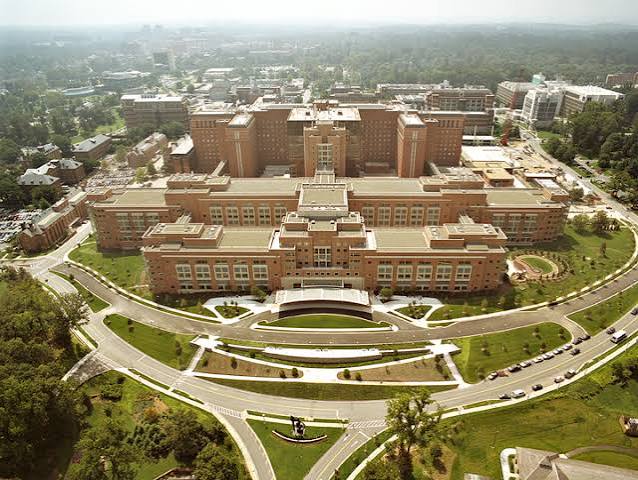
The position is based in the Laboratory of Brain and Cognition at the National Institute of Mental Health (NIMH), National Institutes of Health (NIH), in Bethesda, Maryland, USA.
Under the guidance of Dr. Peter A. Bandettini, the research focuses on advancing functional imaging methods through the integration of MRI technology, quantitative analysis, computational modeling, and neuroscience.
The availability of 7T MRI scanners provides opportunities to investigate advanced neuroimaging techniques and improve the acquisition and analysis of brain imaging data.
📄 How to Apply
Interested candidates should email their application materials to:
Principal Investigator: Dr. Peter A. Bandettini
Application Emails:
Applicants should submit:
- Curriculum Vitae (CV)
- Three Letters of Recommendation
Candidates should highlight their quantitative skills, relevant imaging or signal-processing experience, and interest in advanced neuroimaging research.
Salary: The salary range is listed on the NIH Training website.
Equal Opportunity: NIH is an equal opportunity employer.
📌 Job Details
Institution: National Institute of Mental Health (NIMH), NIH
Laboratory: Laboratory of Brain and Cognition
Section: Section on Functional Imaging Methods
Principal Investigator: Dr. Peter A. Bandettini
Position: Postdoctoral Fellow
Location: Bethesda, Maryland, USA
Research Focus: Functional Imaging | MRI | fMRI | Neuroimaging Methods
Research Areas: Neuroscience | Signal Processing | Computational Neuroscience | Physics | Engineering | Mathematical Modeling
Key Techniques: Ultra-High-Resolution fMRI | MRI Acquisition | Neuroimaging Processing | Spatiotemporal Modeling | Multimodal Imaging
Advanced Facilities: 7-Tesla MRI Scanners
Required Skills: Strong Quantitative Skills | Experience with MRI, fMRI, EEG, MEG, or Related Modalities | Complex Neuroimaging Data Analysis
Preferred Background: Neuroscience | Signal Processing | Physics | Engineering | Computational Methods
Application Deadline: Not Stated
Application Materials: CV | Three Letters of Recommendation
Application Mode: Email
Application Emails: bandettini@nih.gov | nimhsfim@mail.nih.gov
Salary Information: Available on the NIH Training website
Category
Postdoctoral Position | Postdoctoral Fellow | National Institute of Mental Health | NIH Research Jobs | Functional Imaging | MRI Research | Bethesda Research Jobs | USA Postdoc Jobs
🏷️ Tags
#Postdoc #PostdoctoralFellow #NIH #NIMH #Neuroscience #MRI #fMRI #Neuroimaging
Follow Biopractify for more & Join our community : https://chat.whatsapp.com/F38FNCU0nfvFCDf1mYJDbm
About The Author